Well its that time again, time to either make an order with R&F Encaustics and get some new bricks of wax on the way… Or! You could order bulk supplies from them and make about 5 times as much for the same price.
 So set aside the better part of a day and get to work. Here is how to make your own encaustic medium.
I have been using this recipe since 2002 when my professor Reni Gower encouraged our class to learn encaustic. The class all pooled together money for a bulk material order and I and a few others made our own mediums. I was immediately fixated on this material and after the semester I bought all the left over medium my classmates had made and not used.
Starting out here is what you need:
Ingredients:
15% by weight dammar resin to beeswax a good ratio is 4.5 lbs of pure filtered beeswax (I prefer bleached) to 1 lbs of damar resin crystals.
Equipment:
- Large Crock Pot
- Candy Thermometer
- Large Pot (Stove top style)
- Cookie Sheets or Cake Pans
- Wooden spoon or an old paint brush handle
- Piece of silk screen big enough to cover your “Large Pot” by about 2 inches all around
- Handful of Clothespins
- Ladle (unless your crock pot is easy to pour from)
- Note: All this kitchenware is now forever, encausticware, so don’t try to cook food with it!
- Clean Utility Knife
- Large Freezer Bags
The Beeswax is obviously the primary ingredient in your medium. Your second ingredient: the dammar crystals, are what traditional dammar varnish is made from. If your an oil painter you’ll recognize it right away. Dammar varnish is made by dissolving these crystals into a liquid state. The dammar protects the wax, keeping it from blooming and clouding during room temperature fluctuations. The resin will also make the wax cure clearer over time. The most important quality that dammar imparts on the wax to me is a hardness to the medium.
Caution: Throughout the process your going to need to keep a close watch on the temperature of the wax. Be sure to never heat it above 230 Degrees F. For me this means I have to vary my crock pot between the high and low setting. I would recommend a crock pot with a variable temperature setting if possible so that temperatures can remain more constant. Use your candy thermometer to measure this each time you stop to check on your brew.
Start by adding half of the beeswax to the crock pot. It may take a while to fully melt. Once this has completely melted then add all of the Damar Resin Crystals. Be sure to stir this in and let it start to melt. You may want to use a dust mask to avoid the dust that comes out of the damar bag. (It can’t be good for you)
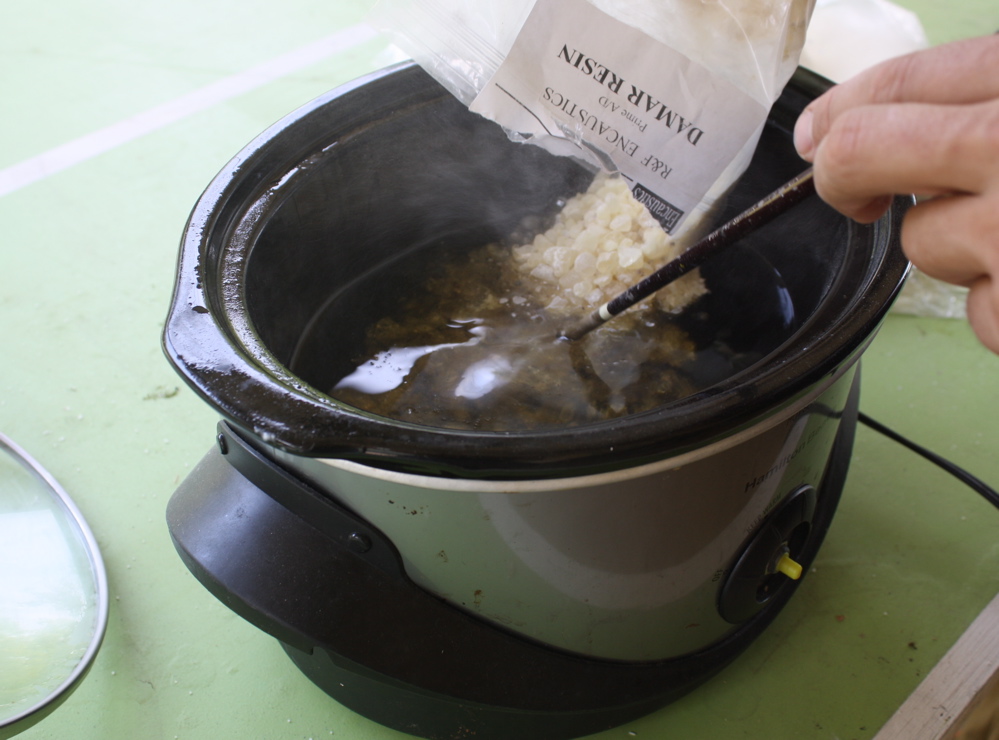
Adding Damar Resin Crystals
Once the damar is in the crock pot you will need to monitor it about every 30 minutes by stirring. Use your wooden spoon or brush handle to stir the resin. Your goal is to encourage melting and also to keep the resin from burning on the bottom.
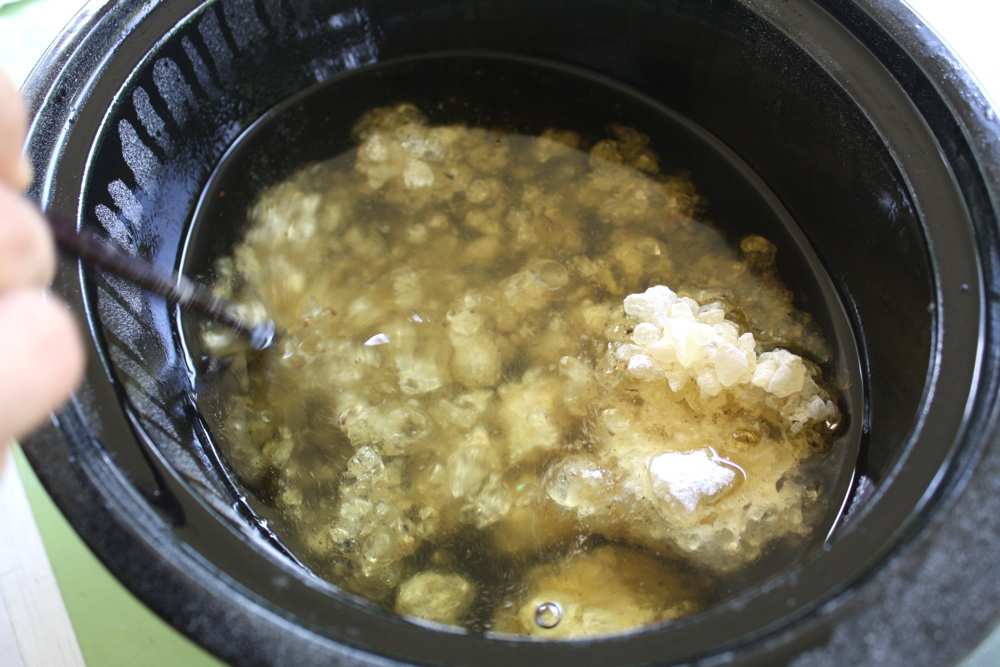
Dissolving Resin
As you stir you will notice there are bits of debris accumulating in the mix. Don’t worry, that is just bugs, elephant hair, bark and whatnot detritus priorly trapped within the solid damar resin. All of this will get strained out later. Be sure to be monitoring temperature throughout the process.

Resin Dissolved
When all of the damar has melted you will need to add in the rest of the wax and allow it to fully melt.

Adding Remaining Beeswax
Now ready your strainer by clothes-pining the silk screen fabric around the lip of the Large Pot. I like to try and make the middle of the screen sit a bit lower than the edges so that was pools up in the center of the pot. Then pour or ladle the wax medium over the screen.

Straining Medium with Silk Screen
This is going to strain all of the debris from the mixture. You will need to go slow when pouring as the wax can only get through so fast. When the screen clogs up with bark, etc. wipe it off with chipboard or cardboard. The silk screen is reusable so once this step is done squeegee it clean. It is okay to let a thin layer of wax dry on it. You can heat it up in the oven on a cookie sheet for a few seconds to get it ready next time.
Now that you have the medium strained and the screen removed, clean out the crock pot with an old t-shirt. Pour the mix back into the crock pot and brew this for another hour. Mixing every so often. Then, if you still have debris floating in the mix strain it again. If not just pour/ladle it back into the large pot. Now you are ready to pour this into your cookie sheets, muffin trays or whatever shape of mold you like to use!
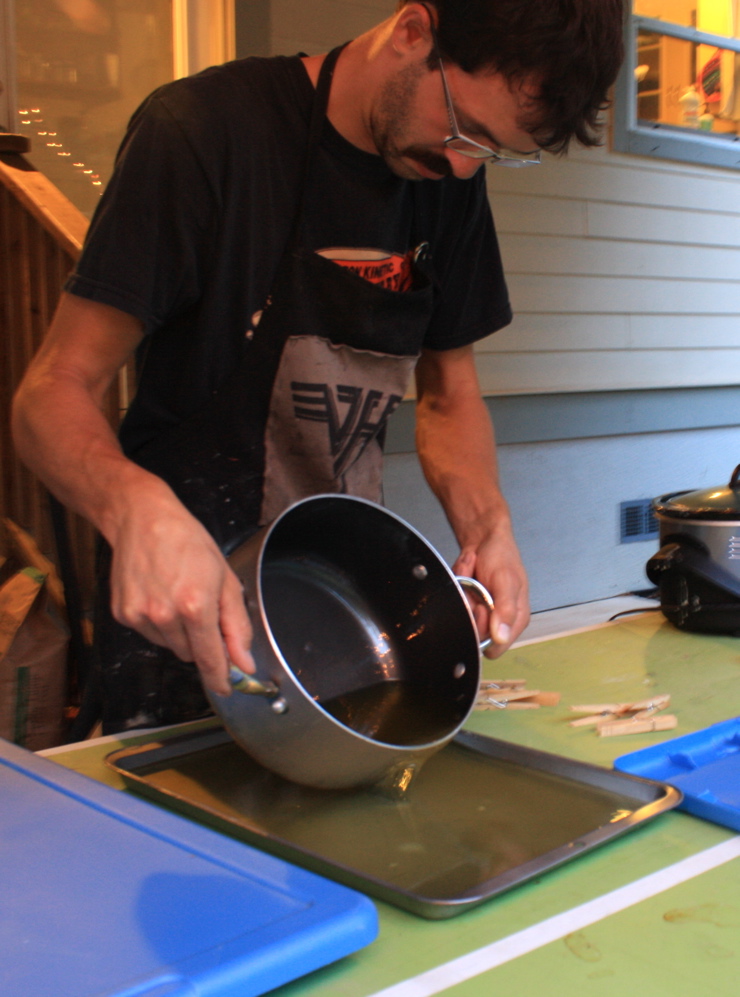
Pouring strained medium into pans
Be sure to cover the top of the trays with old cardboard or in my case plastic storage bin tops so that wax does not pick up dust from the air as it cools.
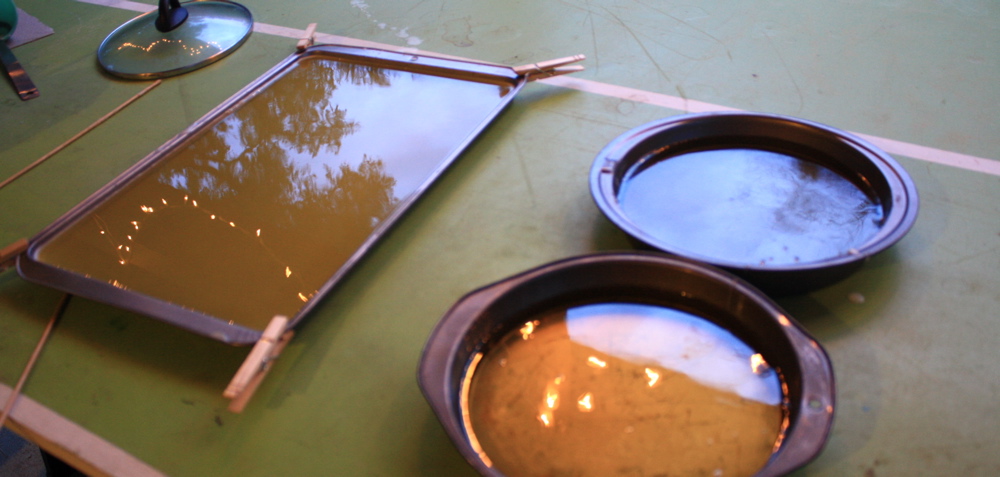
Hot Medium
Once the wax has had some time to cool off it will start to do some interesting things so sneak a peak every so often!

Cooling Meduim
Now that the wax has completely cooled off in your cookie sheet take either a heated spatuala or a utility knife and cut the wax into whatever useable size you see fit.
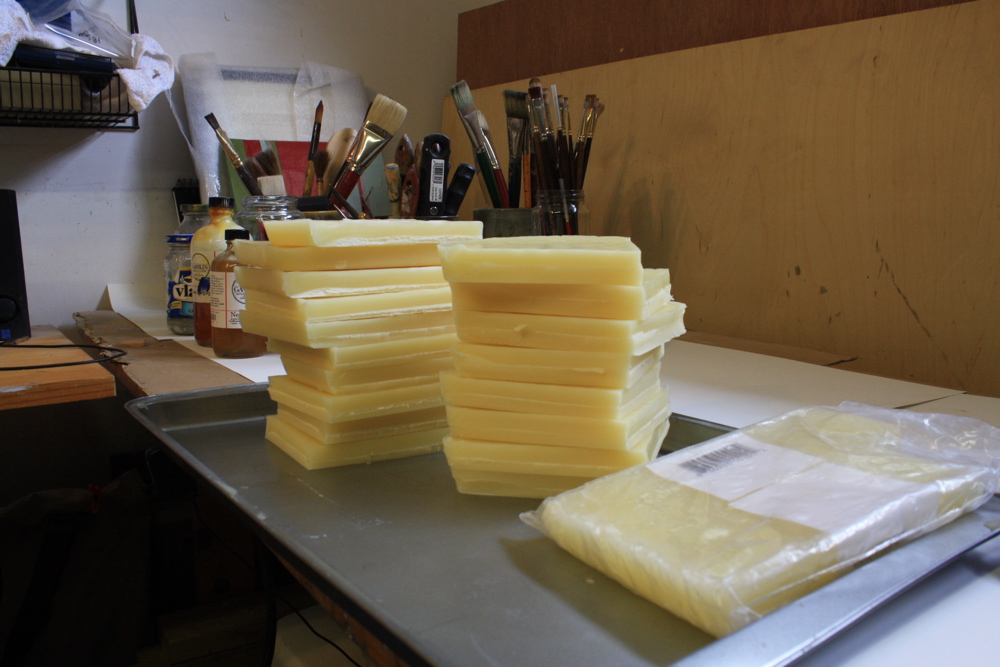
Final Results of 4.5 lbs of Beeswax and 1 lbs Damar Resin Crystals and 6 hours of brewing
Note: The amount of medium homemade compared to one large cake of store bought medium.
I prefer to store mine in large freezer bags to keep them dust free and easy to access. Store all of your materials in a container and label it so everyone knows that old crock pot and cookie sheet can no longer be used in the kitchen.
Congratulations you have just earned your cooking badge, revel in the knowing of the process your materials were made with! Now go paint something! Thanks to my sweetie pie Michelle for taking the photos!












 the benthos